
CASE STUDY
Industry Gallery
Gallery Director
I was responsible for the full curatorial and operational lifecycle of every exhibition, from concept and artist selection through physical installation, stakeholder communication, and public representation at international art fairs and cultural institutions.
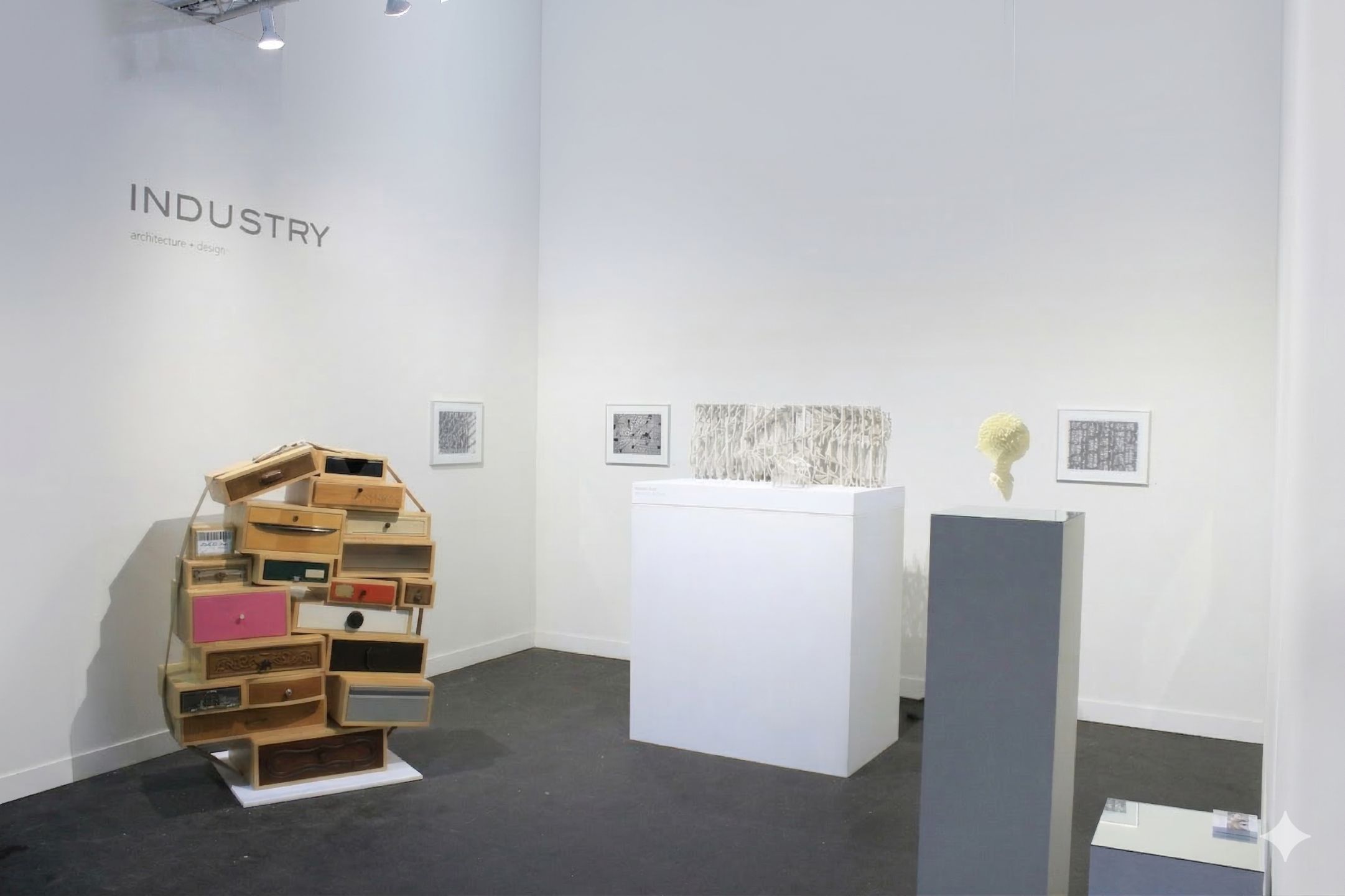
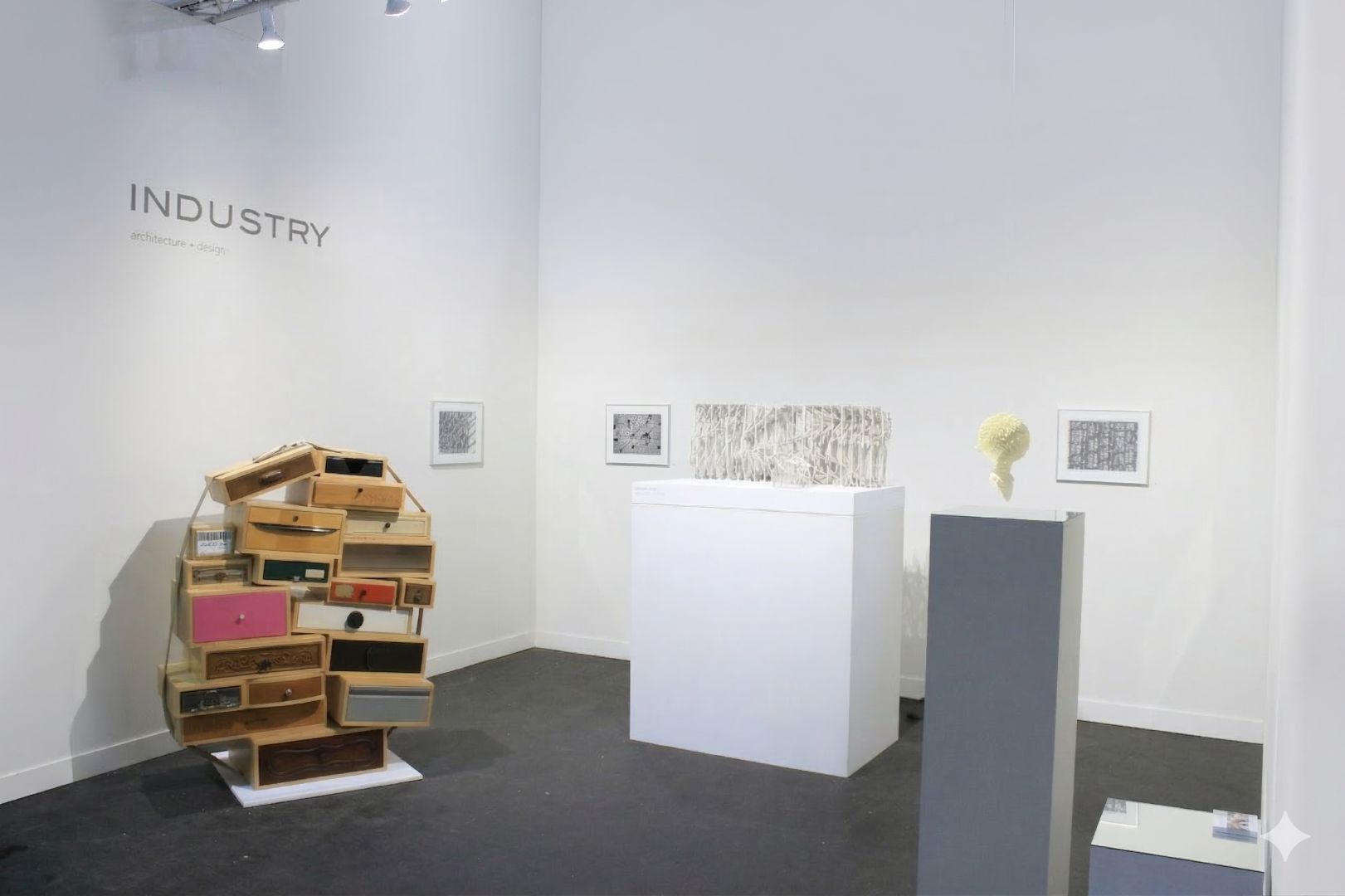
Industry Gallery was the only gallery in the United States dedicated exclusively to 21st-century work at the intersection of art, science, architecture, and design. Founded in a former DC auto repair shop and later expanding to Los Angeles at the Pacific Design Center, the gallery represented internationally recognized artists including Faye Toogood, Formafantasma, Elena Manferdini, and Maarten De Ceulaer.
The work was never decorative. It was experimental, using materials such as fiber optics, AR/VR, carbon fiber, recycled paper, and 3D printing to create three-dimensional exhibitions that challenged how people relate to objects and space.
The Problem
Galleries operating at the intersection of fine art and design face a structural tension that most institutions are not built to handle. Collectors, museums, and the press each bring different frameworks, aesthetic, commercial, and academic, for how to value work that does not fit neatly into either category.
Layered on top of that, Industry Gallery operated across two locations and an international fair circuit spanning Design Miami, FOG, and ZONA MACO, which created real complexity around logistics, brand positioning, and audience development.
Each exhibition had to work simultaneously as an artistic statement and a credible contribution to a global conversation about the future of design.
The Solution
Every exhibition was treated as a complete, end-to-end product. The curatorial process followed a deliberate path: artist outreach, concept development, budget allocation, vendor coordination, fabrication oversight, and installation.
To build institutional credibility, the gallery was represented off-site through lectures and panel appearances, while relationships were cultivated through studio visits, museum programming, and direct collector outreach.
Exhibition catalogs were produced as dual-purpose artifacts: critical cultural documents and sales tools that extended each show's life beyond its physical run, grounded by original and commissioned essays that positioned the work intellectually.
On the operational side, custom mounting, framing, and condition-reporting protocols were implemented to protect complex, high-value works across transport, exhibition, and storage, which was essential for a program operating at the level of international fairs and major museum acquisitions.
Key design decisions included:
- Curatorial rigor with operational discipline: each show was developed as both a cultural statement and a production system that had to ship on time and at a high standard.
- Institutional relationship-building: talks, panels, studio visits, and museum programming helped position the gallery as an active contributor to the field, not just a sales venue.
- Publishing as strategy: catalogs functioned as scholarship, brand building, and collector enablement all at once.
- Logistics designed for fragile, high-value work: custom mounts, framing plans, condition reporting, and transport protocols reduced risk across fairs, exhibitions, and storage.
Results & Impact
Museum Acquisitions
Works from the gallery's program were acquired by SFMOMA, LACMA, the Carnegie Museum of Art, the Denver Art Museum, the High Museum in Atlanta, the Mint Museum in Charlotte, and the Milwaukee Art Museum. The gallery's first sale went to SFMOMA shortly after opening.
Press & Publications
The gallery earned coverage across major design and culture outlets including The New York Times, The Washington Post, Wallpaper*, Dezeen, and artnet, and was featured in official publications for Design Miami, Design Days Dubai, and the Pacific Design Center.
Global Recognition
- Only American gallery invited to the Gwangju Design Biennale in South Korea in 2013.
- Gallery artists were represented at the Beijing Architectural Biennale in 2013 and the Venice Biennale in 2014, with Tobias Klein selected by Rem Koolhaas for the architecture section.
- Public commissions were executed for Los Angeles, Arlington County, Bloomberg London, and Dubai.